01
Design Canvas
Web Products
We turn requirements into clear user flows, wireframes, visual systems and polished interfaces that are easy for users to understand and teams to build.
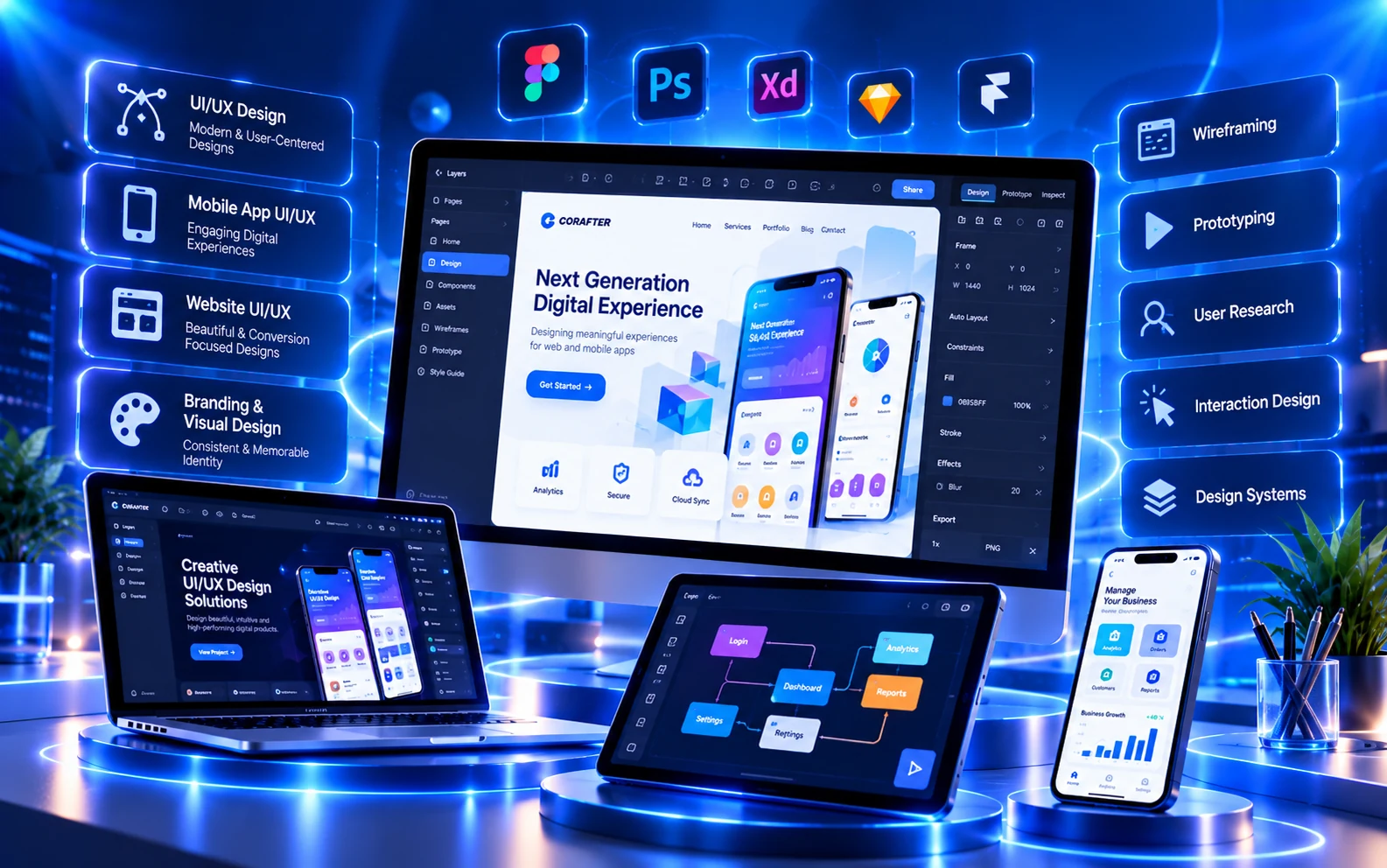
Good design is not decoration added at the end. We use user flows, information hierarchy, interaction patterns and reusable components to make digital products clearer, faster to understand and easier to use.
We simplify important journeys, establish visual hierarchy and create consistent patterns that users can learn quickly.
We reduce friction before development starts, giving teams a clear visual language and validated user flows.
Web Products
Mobile Apps
SaaS Dashboards
Explore practical ui/ux design scenarios that can be shaped around your goals.
Choose the capabilities that match your project. We can start focused and expand as your requirements grow.
Understand users, business goals, constraints and opportunities before designing screens.
Map the steps users take to complete important tasks.
Validate structure and information hierarchy before visual polish.
Test interactions and communicate the intended experience clearly.
Create responsive, accessible interfaces for modern websites and platforms.
Design touch-friendly experiences around mobile behaviors and constraints.
Build reusable components, patterns and tokens for consistency.
Identify friction and improve flows before and after development.
The right ui/ux design approach should create measurable value without unnecessary complexity.
Help users understand where they are, what matters and what to do next.
Use reusable patterns to create a cohesive product experience.
Give developers organized assets and specifications that reduce ambiguity.
Find unnecessary steps and improve important interactions.
We keep deliverables clear so you know what is being built and why.
We choose tools and platforms around performance, maintainability, security and long-term fit.
A focused ui/ux design workflow with clear checkpoints from discovery to delivery.
Review users, goals, current experience, business rules and constraints.
Create information architecture, user flows and low-fidelity wireframes.
Build the visual language, components and high-fidelity interfaces.
Connect key screens and validate important interactions.
Prepare organized components, specifications and assets for development.
Here are a few common questions. If you need a more specific answer, send us your project details.
Let’s map the experience, remove friction and create a clearer interface for your users.